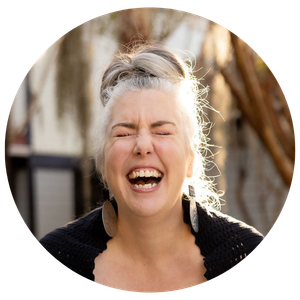
Choosing a voice teacher can feel overwhelming, a little scary, or even intimidating. Where do you even start? What questions should you ask? What kind of person do you want to work with? Do you know what you want to work on? Whether you have a really specific idea or not, here's where I'd start.
The right voice teacher asks what you want from your voice before they tell you what to do with it. What do you want it to sound like? What do you hope to improve? They'll share their feedback and observations, of course, just not right off the jump. And deciding to work together is a two-way street: it's not about being picked, it's about choosing each other. I learned that at 13 years old, when I found my mentor. Here's my story, and what I'd tell you to look for today.
The teacher who wanted me to sing opera
A few years earlier, I had singing lessons in Winnipeg with a very serious classical teacher, a retired tenor in his late 70s. He was a lovely man with a great deal of musical and vocal knowledge, a true lover of voices and an opera buff. He introduced me to all kinds of amazing opera singers, like Beverly Sills and Maria Callas, and even lent me their biographies (which I did read, because I loved to read). But our lessons were long, and full of vocal technique I wasn't equipped to process or integrate in any meaningful way at 10 years old. (Think endless scales and arpeggios, with no chance to sing actual songs. And lying on the floor with a phone book on my stomach to "engage my diaphragm"? Spoiler alert: that's not how any of this works.) Honestly? I was so bored. I wanted to play baseball, ride my bike with my friends, and perform Madonna's True Blue album in the backyard for my parents while I pretended to be a rock star. (I made them listen to the entire album, and they did. #Bless.) But even at 10, I had a naturally big, mature voice, and he could hear a quality in it that potentially leaned in an operatic direction. He wanted to train it and have me sing classical and operatic repertoire.
I did not want to sing opera.
It will come as no surprise that I resisted those lessons with everything I had and, in the end, stopped going.
The teacher who asked me
When I was 12, my family moved from Winnipeg to the Western Communities, just outside Victoria, BC. That age is hard for any kid, and I was no different. Moving away from my community and my friends to a completely new place, where nobody seemed interested in the same things I was, was really, really hard. So for my 13th birthday, my mom suggested singing lessons, and called the Victoria Conservatory of Music. They offered us two teachers. One of them was Elizabeth Taylor (yes, Elizabeth Taylor; no, not that Elizabeth Taylor 😉).
I sang for Liz, and she said, "I hear a lot of potential in your voice. I would very much like to work with you, if you would like to work with me."
She asked me.
I liked her immediately. She was so warm and inviting, and she genuinely seemed both interested in and excited about working with me (in her very British way, of course). I didn't want to wait to sing for the other teacher, which caused a little drama, unbeknownst to me! But my parents trusted me to make that decision, and it was ultimately the right one. I studied with her until I left for college at 19, and on and off through my 20s whenever I needed a refresher or a fresh set of ears.
Here's the funny part: I went on to study opera at the Curtis Institute of Music and became a Lindemann Young Artist at the Metropolitan Opera. The thing I'd pushed away at 10, I fell in love with at 13. The difference was the teacher.
I've never forgotten that she gave me the choice, and it's become the heart of how I teach. Finding the right teacher goes both ways. You need to decide whether you want to work with me, and I need to make the same decision. Both matter equally because, in the end, what we're looking for is as close to a perfect fit as we can get. Not all teachers and singers are meant to work together, and that's completely okay.
What I keep from Liz (and what I've let go)
When I started studying voice seriously, it was 1990, and teaching back then was very top-down. Think Shirley MacLaine in Madame Sousatzka, the teacher as all-knowing guru: "I know what's best for you. You'll practise and perform the way I tell you to, and if you don't, you'll never succeed." I was completely bought into that model, because I didn't know any different. I worshipped Liz, and whatever she said went.
But Liz never encouraged it. In fact, she was uncomfortable being put on a pedestal. Unlike teachers who lean into that kind of hero worship, she never let our lessons become about her. That top-down, hierarchical model is exactly what I've let go of.
She was warm, and she had boundaries. She never kept me at arm's length, but she was always clear: I am your teacher. Looking back, I really appreciate that. She became my model for the kind of relationship I wanted with a teacher, and later, for the kind of teacher I wanted to be.
Of course, everyone wants to feel connected. It's a human need, and singing is vulnerable work, so closeness can naturally happen (and that can be a good thing!). We all want to like the people we work with. But in a teacher-student relationship, that connection works best with kind, clear boundaries.
So here's what I keep from that experience:
Warmth and connection. I genuinely care about my students, and I always want the best for them.
Boundaries. I stay in my lane, and within my scope of practice. This work can be therapeutic, but it isn't therapy, and I'm not a therapist. My job is to give you the musical and practical tools: how to practise, execute, condition, be vocally safe and emotionally resilient. My job is not to make it happen for you. I want to teach you to drive your own car, not be your chauffeur.
Rock-solid belief in my students at all stages of the learning process, when we're rocking and rolling and the concepts are landing and sticking, when things take more time and repetition to click, and everything in between.
The extra investment, for the singers who want it: lots of face-to-face time, material inclusions, support between lessons, and more specific, targeted attention, like warming you up at festival or before your exam, and travelling with you. That's the thinking behind my inclusive tuition packages, from Love Your "Voce"! to The Diva Package to The Prima Elite Package.
13-year-old me: then and now
I'd always sung pop music, but within about six months of studying with Liz, my vocal technique and approach had changed so much that I physically didn't feel like I could sing the contemporary music I loved anymore. (I was a Madonna girl, and I sang harmonies with my dad on our long drives to and from Victoria, stuck in the Colwood Crawl.) I'd moved into a classical style and shape of singing, and I couldn't make the sounds I wanted. Everything I sang, pop included, came out sounding like opera.
My brothers teased me about it constantly, and later, so did friends at college. I'd sing Fleetwood Mac or Sarah McLachlan with great pitch and all the range, but they came out as operatic versions of those songs, and I couldn't hear the difference. It had been thoroughly ingrained in me: Western classical technique was "the correct way to sing," and anything else would damage my voice. Ultimately, I didn't feel allowed to sing any other way. I'd been boxed into a very narrow corner.
Looking back, I can see that nobody ever taught me a lesson as a kid that was kid-centred. That's exactly why play-based, student-led learning is such a huge part of how I teach now, and why I'm trained to teach both classical and contemporary microphone styles.
So if a 13-year-old like me walked into the Studio today, loving Olivia Rodrigo or Harry Styles and singing in the car with their family, here's what would happen:
I'd ask questions first. Who are your favourite singers? What kind of music do you love to sing? To listen to? What inspires you? What gets you excited?
I'd talk with their parents, too. What do you picture voice lessons looking like? Any other lessons, teachers, RCM exams or instruments?
We'd start with the music they love. If that's classical, fantastic! We can dive right into classical repertoire and RCM exams. If it's pop, musical theatre or another contemporary style, that's where we'll start: contemporary technique, the microphone, the amp and the backing tracks. And festival welcomes every style, so there's room for all of it. There's no prescriptive "classical first, then everything else."
I'd ask, "What do you notice? How does it feel? Is this the vocal outcome you're looking for?" If not, why not? We'd get more specific about their goal, try exercises designed for whatever technical challenge comes up, then apply those techniques to the song itself. In classical styles, that means singing unamplified, just like the exercises. In contemporary microphone styles, we'd do the exercises off the mic and the songs on it. Then we'd keep building those motor skills through repetition and guidance, for as long as it takes to make them both repeatable and sustainable. And that's a decision we'd make together.
Green flags: what to look for in a voice teacher
They ask about you. What are you looking for? Why lessons, and why now? What made you reach out?
They want to hear your story, too. Stories and anecdotes are a wonderful way to teach (I use them all the time!), and the right teacher's stories serve your learning. It's a two-way conversation, but there's a time and a place for their whole life story.
They're clear about the studio's vibe. Is everyone expected to do festivals, competitions, the school musical or choir? Is that an option but not a requirement? Or is it a gentler space for singing for the love of it? None of these is wrong, but you deserve to know which one you're walking into.
They're inclusive of different neurotypes and learning styles, whether a singer needs extra time, needs information presented in different ways (visually, by ear, or a mix of both, for example), or learns music and processes information really quickly. The right teacher won't rush you through, or artificially slow you down, either.
They adapt to the singer in front of them. The right teacher for you is open to working on whatever you want to work on, then figures out the exercises and approach to get you there. In my lessons, I always start by asking what you'd like to work on. If you have something specific in mind, we dive right in. If you don't (which is totally normal, at any age!), I'll offer a buffet of choices: "We could do this, this or this. Which one sounds like fun to start with?" And if choosing feels overwhelming, I'll simply lay out the plan: "Today we'll start with this, then this, then this." Some singers want all the control, and some have no idea where to start. Both are completely okay. And if it's been a long week of exams and no sleep, we can adapt to that, too, with some active listening exercises where you get to discover singers or shows you've never heard before.
Red flags: when to think twice
One prescribed technique laid over everyone, and if you don't get it, there must be something wrong with you, not the teaching.
The focus is on the teacher's reputation or ego, not the student, or they expect to be put on a pedestal.
"Classical first," before you're allowed to sing the music you love. (And phone books. Please, no phone books.)
And, in the spirit of transparency: I'm not perfect either. Sometimes I catch myself slipping into old top-down habits. So I work on giving grace, to my students and to myself, especially on the hard days. And that's a practice I never stop.
How to test the click: a FREE Discovery Call
The best way to know if a teacher is right for you is to talk to them. That's exactly what my FREE 20-minute Discovery Call is for. It's a video chat, there's no singing, and I won't coach you. Here's what happens:
You talk, and I listen. Your singing background, your goals, what worked (and what didn't) with past teachers.
I share how the Studio works, and we figure out what might best suit your vocal needs. By then, I'll have a better idea of what you're really looking for, so we can talk through lesson options (short-term and flexible, or long-term and structured), format (in person in Chilliwack, online, or both), pace, and what the next steps would look like. Everything here is student-centred and built on a culture of felt safety, where my role is to guide and steward your growth, not to dictate your outcomes.
If we both feel it's a good fit, I can book your Initial Fit Session right there on the call. The Initial Fit Session is designed to be a gentle, low-stress taste of what a real lesson might feel like, plus a deeper dive into what I think would suit your goals best and how your next steps might unfold.
Within three business days of your Initial Fit Session, I'll send my recommendations in writing. Then you'll have time to think it over, and we'll check in within a week or so to make a decision together.
There's no obligation, ever. Every step is a checkpoint. If the Discovery Call doesn't feel right, no harm, no foul. If the Initial Fit Session doesn't feel right, we don't go any further. My goal is for us to be as close to a perfect fit as we can be, and we only move forward when we both say yes.
If either of us feels it's not the right fit at any point, I'm always happy to point you toward a colleague who might be a better match for you.
A perfect fit isn't a teacher picking a student or a student picking a teacher. It's two people choosing to work together.